
Seymour Cray
Father of supercomputing; designed the fastest computers for decades.

Michael Hicks · CC BY 2.0
Seymour Roger Cray was an American electrical engineer, computer scientist, mathematician, and supercomputer architect. He designed a series of computers that were the fastest in the world for decades and founded Cray Research, which built many of these machines. Called 'the father of supercomputing,' he has been credited with creating the supercomputer industry.
- born
- September 28, 1925
- died
- October 5, 1996
- field
- Electrical engineering, computer science, mathematics, supercomputer architecture
- nationality
- American
- known_for
- Designing the fastest computers in the world for decades; founding Cray Research; credited with creating the supercomputer industry
Lore & Background
Cray was born in 1925 in Chippewa Falls, Wisconsin, to Seymour R. and Lillian Cray. His father, a civil engineer, fostered his interest in science and engineering. At age ten, Cray built a device from Erector Set components that converted punched paper tape into Morse code signals. He graduated from Chippewa Falls High School in 1943, served as a radio operator in World War II, and later earned a B.Sc. in electrical engineering (1949) and an M.Sc. in applied mathematics (1951) from the University of Minnesota.
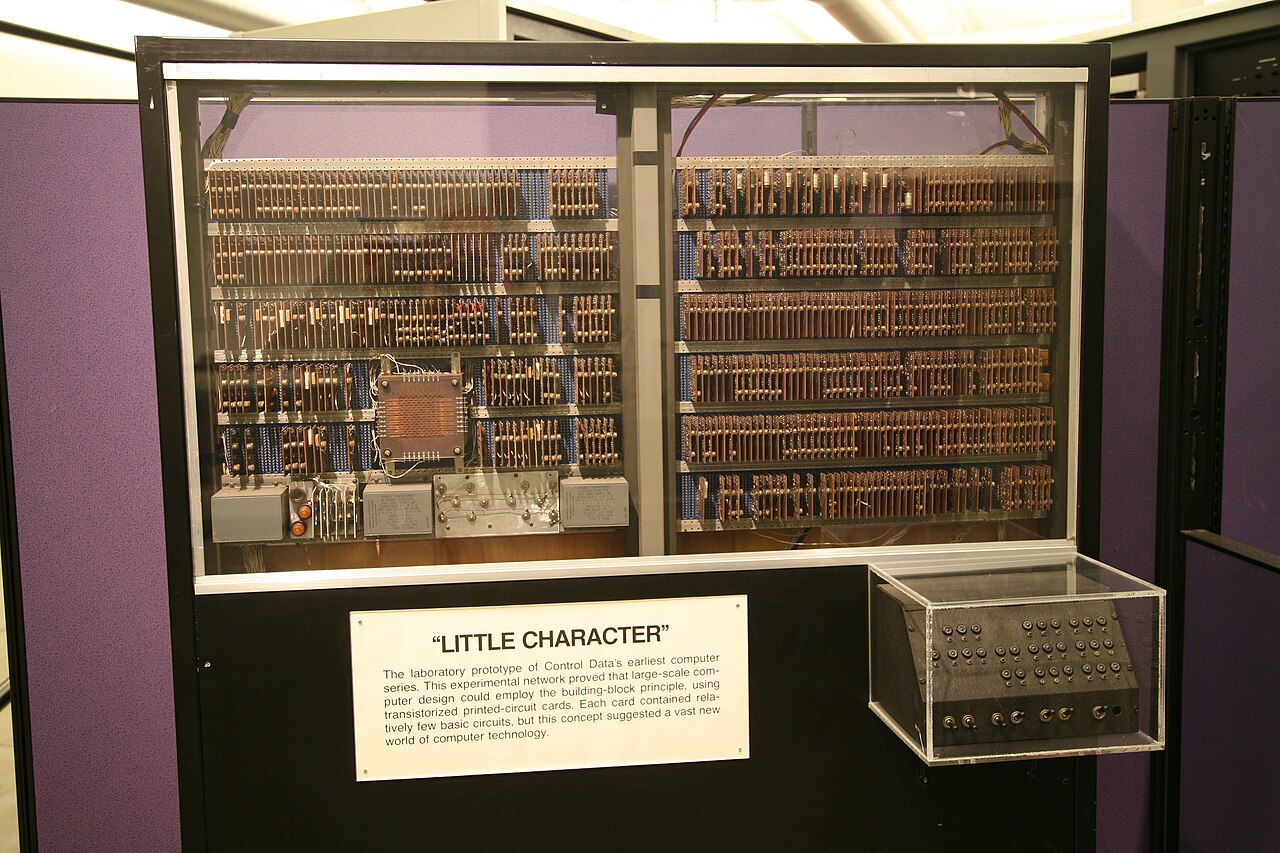
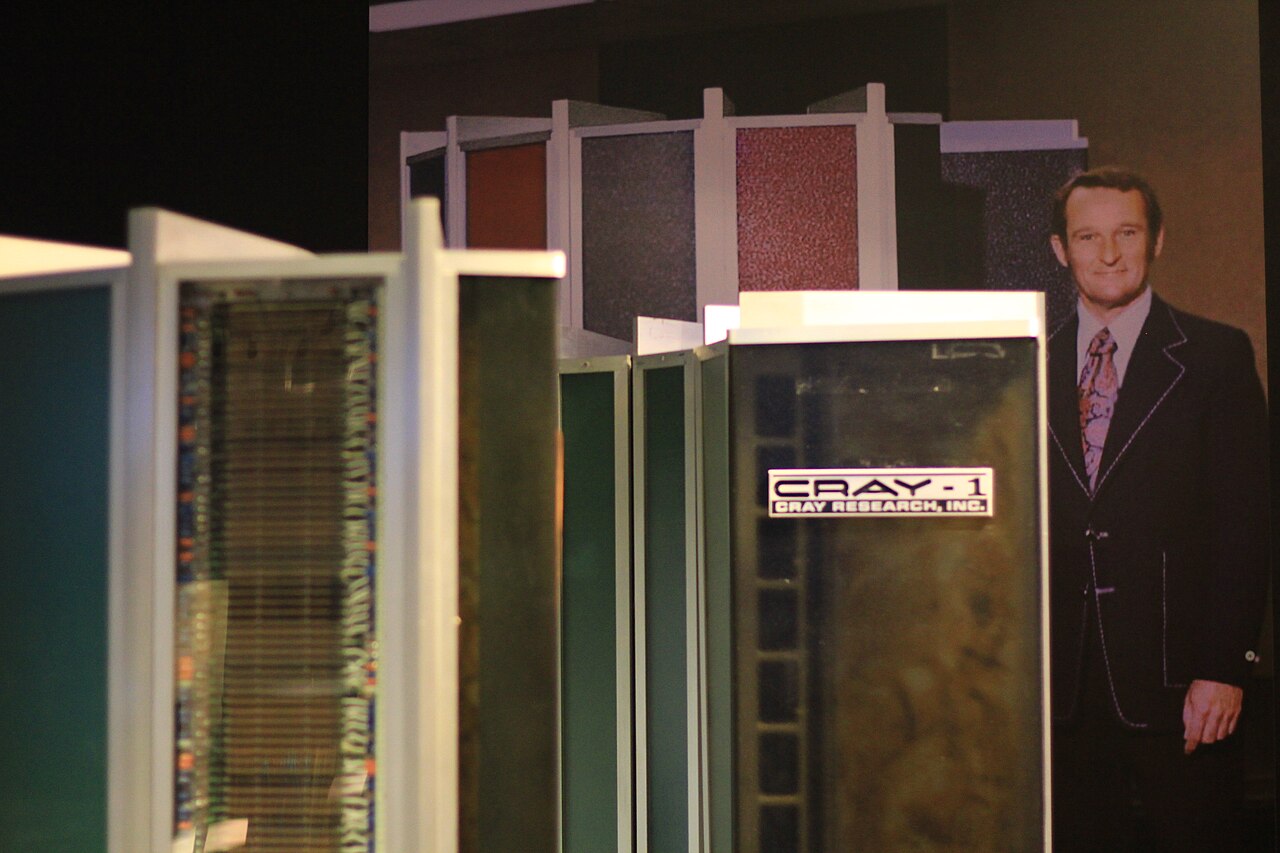
Cray joined Engineering Research Associates (ERA) in 1950, where he designed the ERA 1103, the first commercially successful scientific computer. In 1957, he co-founded Control Data Corporation (CDC) with William Norris. At CDC, he designed the CDC 1604, then the CDC 6600—the first commercial supercomputer—and the CDC 7600, which improved speed by a factor of five. Frustrated by management interference, he moved his lab to Chippewa Falls. After the failed CDC 8600 project, he left CDC in 1972 and founded Cray Research in 1973, releasing the Cray-1 in 1976.
Reader's Guide
Seymour Cray's significance lies in his pioneering role in creating the supercomputer industry. His designs, such as the CDC 6600 and Cray-1, consistently set the standard for computational speed, often outperforming all competitors by wide margins. Cray emphasized that building a fast system required more than a fast CPU—input/output bandwidth had to be maximized to avoid starving the processor. His approach to solving design problems, such as replacing I/O interrupts with polled requests from peripheral processors in the CDC 6600, enabled breakthroughs that competitors like IBM struggled to match. Cray's legacy is reflected in the words of contemporaries: Joel S. Birnbaum noted that many things high-performance computers now do routinely were at the farthest edge of credibility when Cray envisioned them, and Larry Smarr called him 'the Thomas Edison of the supercomputing industry.' His work laid the foundation for modern high-performance computing.
Did You Know?
- At age ten, Cray built a device from Erector Set components that converted punched paper tape into Morse code signals.
- Cray served as a radio operator in World War II in the Pacific theatre.
- The CDC 6600 was the first commercial supercomputer, outperforming everything then available by a wide margin.
- Cray's house in Chippewa Falls included a huge bomb shelter due to his worries about nuclear war.
Early Life and Formative Years
Seymour Roger Cray entered the world on September 28, 1925, in the small Wisconsin town of Chippewa Falls. His father, a civil engineer, nurtured a deep curiosity for science and mechanics in the boy from an early age. By ten, young Cray had already cobbled together an Erector Set contraption capable of translating punched paper tape into Morse code signals, a remarkable feat for a child. The family home's basement was essentially handed over to him as a personal workshop, a space where experimentation could proceed without interruption. After graduating from Chippewa Falls High School in 1943, Cray was drafted into World War II service as a radio operator. He saw combat in Europe before being reassigned to the Pacific, where his work focused on intercepting and breaking Japanese naval communications. Following the war, he pursued formal education at the University of Minnesota, earning a bachelor's degree in electrical engineering in 1949 and a master's in applied mathematics in 1951.
The CDC 6600 and Defining the Supercomputer
By the late 1950s, Cray had grown restless with what he considered the mundane constraints of designing low-cost commercial machines. His ambition was singular: build the fastest computer in the world. That drive produced the CDC 6600, widely recognized as the first commercial supercomputer. Rather than relying solely on raw processor speed, Cray understood that a system's overall performance depended critically on input and output bandwidth. He later summarized his philosophy by noting that anyone could build a fast CPU, but the real trick was building a fast system. One of his most significant engineering contributions was solving the problem of imprecise interrupts, a design flaw that had plagued IBM's competing Stretch project. Cray replaced conventional I/O interrupts with a polled request system managed by ten built-in peripheral processors, essentially small computers dedicated to shuttling data in and out of central memory. The result was a machine so far ahead of its competitors that, for those who needed peak performance, no alternative existed on the market.
Building Companies and Navigating Industry
Cray's professional path was marked by a recurring tension between his engineering vision and corporate management. He joined Engineering Research Associates in 1950, a firm born from a former Navy codebreaking laboratory, and quickly established himself as a leading expert on digital computing, particularly through his work on the ERA 1103, the first commercially successful scientific computer. When ERA was absorbed into Sperry Rand, Cray and William Norris grew increasingly frustrated with the direction of the organization. In 1957, the two co-founded Control Data Corporation, giving Cray a platform to pursue his ambitions. There he designed the CDC 1604, a cost-effective successor to the 1103, but his real passion lay elsewhere. When company leadership pushed him toward designing the CDC 3000 series for average business customers, Cray handed off that work and redirected his energy toward the 6600. His desire for an undisturbed environment eventually led him to establish a dedicated laboratory in his hometown of Chippewa Falls, far enough from St. Paul to deter casual managerial interruptions while still allowing attendance at board meetings.
Legacy and Industry Impact
Seymour Cray is widely regarded as the father of supercomputing, a title reflecting the fact that he essentially created the industry. For decades, the machines he designed held the title of the world's fastest computers, and the company he founded, Cray Research, built many of them. Joel S. Birnbaum, then chief technology officer at Hewlett-Packard, remarked that it seemed impossible to exaggerate Cray's influence, noting that capabilities high-performance computers now take for granted were once at the very edge of what was considered credible when Cray first envisioned them. Larry Smarr, director of the National Center for Supercomputing Applications at the University of Illinois, drew a parallel to Thomas Edison, calling Cray the Edison of the supercomputing world. In a 1963 Business Week article, Cray articulated a principle often misattributed to Herb Grosch: computers should follow a square law, meaning that doubling the price should yield at least four times the speed. This thinking shaped how the industry approached the relationship between performance and cost for years to come.
Gallery

Frequently Asked Questions
Who is Seymour Cray?
Seymour Roger Cray (1925–1996) was an American engineer, computer scientist, and mathematician who became the defining figure behind high-performance computing. He spent his career architecting machines that repeatedly held the title of the world's fastest computer.
What is Seymour Cray most famous for?
He is widely credited with creating the entire supercomputer industry by designing a lineage of machines that dominated peak computing performance for decades. His work turned high-performance computing into a distinct and commercially viable field.
What company did Seymour Cray found?
Cray established Cray Research, a firm dedicated to building and selling his high-performance computer systems. The company became one of the most recognizable names in the supercomputing market throughout its operational years.
Why is Seymour Cray called the "father of supercomputing"?
The nickname reflects his role in essentially inventing the supercomputer as a category and shaping the industry around it. His architectural innovations set the benchmark that competitors and successors measured against for years.
What fields did Seymour Cray work in?
His expertise spanned electrical engineering, computer science, mathematics, and supercomputer architecture. This multidisciplinary background let him approach machine design from both a theoretical and a hands-on engineering standpoint.
More in Inventors And Engineers 1-17
Spotted an error? Know more?
This is a living reference — every entry is fact-audited, and reader corrections feed straight into our audit queue. Suggest an edit · See this site's audit record