
Vladimir Shukhov
Russian engineer-polymath who pioneered hyperboloid structures and cracking methods.

Don-vip · CC BY-SA 4.0
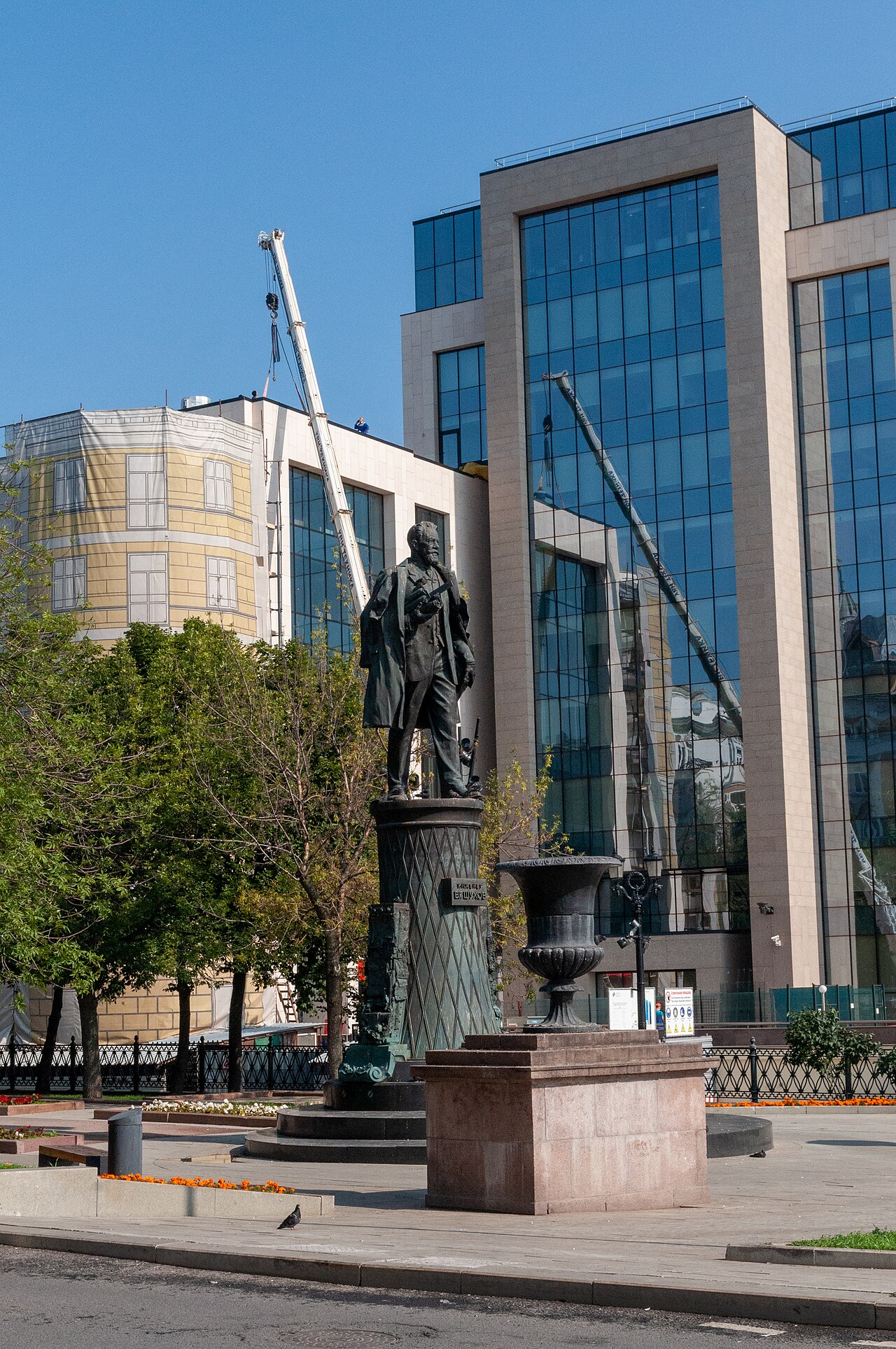
Vladimir Grigoryevich Shukhov was a Russian and Soviet engineer-polymath, scientist and architect. He is renowned for pioneering works on new methods of analysis for structural engineering that led to breakthroughs in industrial design, including the world's first hyperboloid structures, diagrid shell structures, tensile structures, and gridshell structures. He also invented the first cracking method and made significant contributions to the oil industry, bridge and building construction.
- born
- 28 August [O.S. 16 August] 1853
- died
- 2 February 1939
- field
- Engineering, architecture, science
- nationality
- Russian and Soviet
- known_for
- Hyperboloid structures, diagrid shell structures, tensile structures, Shukhov cracking process, Shukhov Tower
Lore & Background
Vladimir Shukhov was born in Graivoron, Kursk Governorate, into a petty noble family. He graduated with distinction from Saint Petersburg gymnasium in 1871, where he demonstrated an original proof of the Pythagorean theorem. He then entered the Imperial Moscow Technical School, studying under Aleksey Letnikov and Nikolay Zhukovsky, graduating with distinction and a Gold Medal in 1876. After a brief stint at the Warsaw–Vienna railroad, he joined a company founded by Alexander Veniaminovich Bari, serving as Chief Engineer until the October Revolution. Shukhov patented the thermal cracking method in 1891 and pursued photography as a passionate hobby, leaving about two thousand photos and negatives.
Reader's Guide
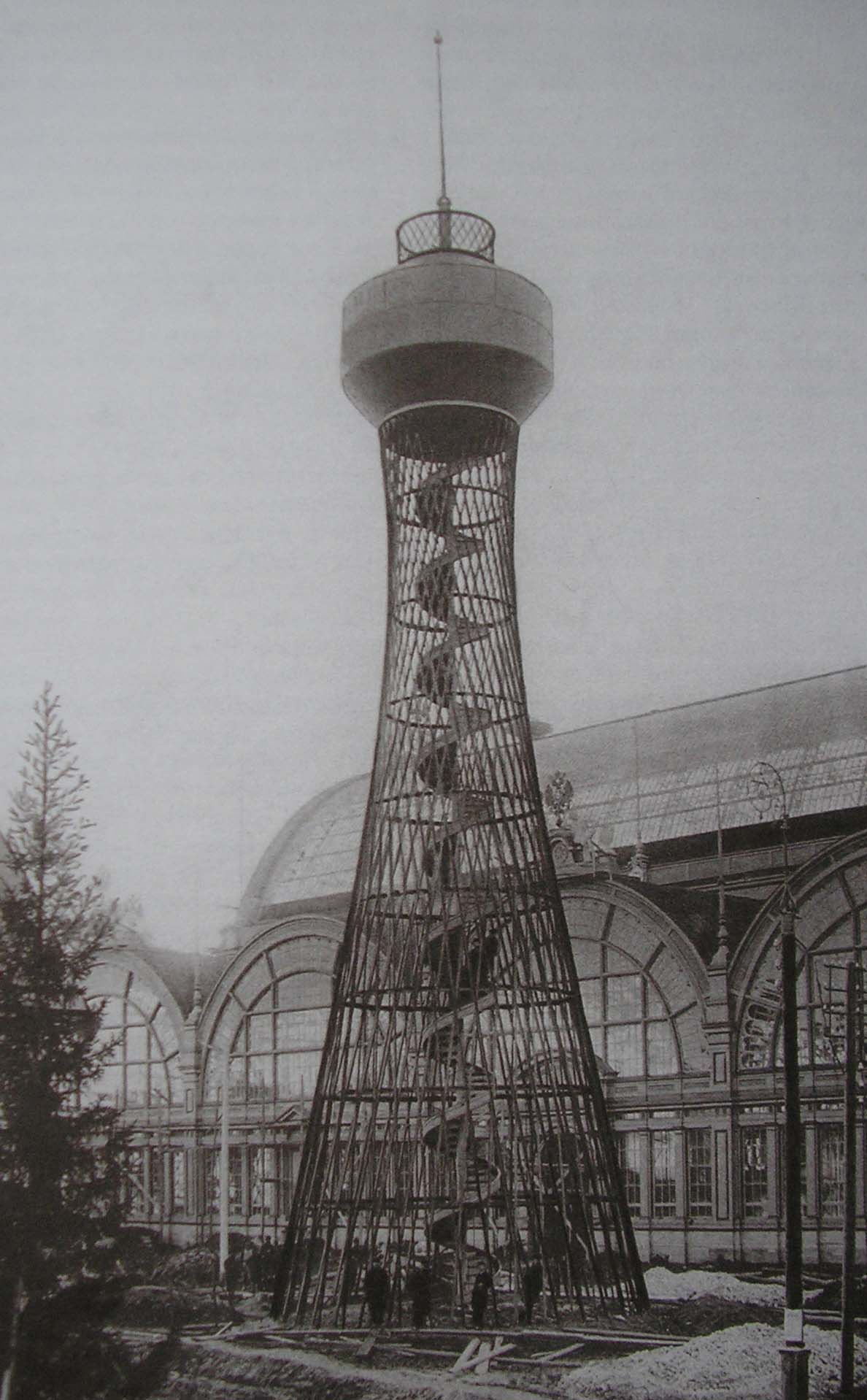
Shukhov's significance lies in his dual impact on structural engineering and the oil industry. He developed practical calculations for stresses and deformations of beams, shells, and membranes on elastic foundations, enabling the design of the first Russian oil tanker, new oil tanker barges, and efficient oil reservoirs. His hyperboloid structures, such as the Shukhov Tower in Moscow and the Adziogol Lighthouse, introduced a new family of doubly curved structural forms based on non-Euclidean hyperbolic geometry. He also designed numerous bridges, water-supply systems, and oil pipelines, including the first in the Russian Empire. His cracking process was used to invalidate Standard Oil's patents. After the October Revolution, he remained in the Soviet Union, contributing to major engineering projects of the 1920s. He retired during the Great Purge but was not arrested or persecuted. His legacy includes about 200 hyperboloid towers worldwide and lasting contributions to Constructivist architecture.
Did You Know?
- Shukhov demonstrated an original proof of the Pythagorean theorem in high school, though the story that he failed a grade for violating textbook guidelines is apocryphal.
- He patented the Shukhov cracking process in 1891; its relationship with Standard Oil's later Burton process is complex and disputed.
- Shukhov designed the first Russian oil tanker and 84 oil-tanker barges that used less than half the metal previously required.
- He left about two thousand photos and negatives, pioneering trends in fine art photography.
Engineering the Oil Age
Vladimir Shukhov earned the nickname "the Russian Edison" for the sheer breadth and originality of his engineering output. His foundational contribution was developing practical methods for calculating stresses and deformations in beams, shells, and membranes resting on elastic foundations. This single theoretical framework unlocked an extraordinary range of practical designs. He engineered the first oil pipeline in the Russian Empire, a twelve-kilometre line near Baku completed in 1878 for the Branobel company. By 1883, the network of pipelines he designed and his partner Alexander Bari constructed stretched beyond ninety-four kilometres, moving thirty thousand barrels daily. He went on to plan the Trans-Caucasian kerosene pipeline spanning eight hundred thirty-five kilometres from Baku to Batumi and a six hundred eighteen-kilometre line from Grozny to Tuapse. His tanker barges required less than half the steel of conventional designs, and eighty-four of them, each one hundred fifty metres long, were built primarily for the Volga. He also designed economical oil storage tanks whose bottoms were calculated as membranes on elastic foundations; one hundred thirty such tanks stood in Baku alone by 1881. His water-supply systems for cities including Cherkassy, Tambov, Kharkov, and Voronezh likely saved thousands of lives during an era of rampant infectious disease.
The Hyperboloid Revolution
Perhaps Shukhov's most visually striking legacy is the family of doubly curved structural forms he invented, rooted in non-Euclidean hyperbolic geometry and now universally recognised as hyperboloids of revolution. He did not merely sketch elegant shapes; he developed the full mathematical apparatus needed to analyse their behaviour under load, making them genuinely buildable. From this foundation he produced a wide variety of lightweight hyperboloid towers and roof systems, including the celebrated Shukhov Tower, which became an icon of structural daring. His analytical methods extended well beyond the hyperboloid itself, seeding breakthroughs in diagrid shell structures, tensile structures, and gridshell structures that engineers still exploit today. These were not incremental improvements on existing practice but genuinely new categories of industrial design, representing the world's first hyperboloid structures. The combination of geometric insight and rigorous stress analysis allowed Shukhov to achieve extraordinary spans and heights with minimal material, a principle that continues to inform contemporary long-span architecture. His work demonstrated that the most efficient structural form is often one that has never been built before, and that the mathematics to justify it can be derived from first principles rather than borrowed from empirical tradition.
A Prodigy's Path to Engineering
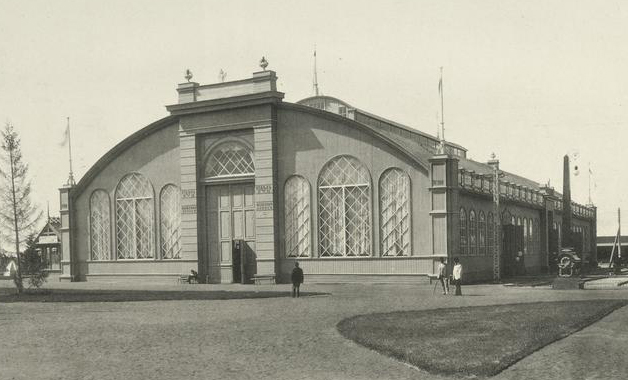
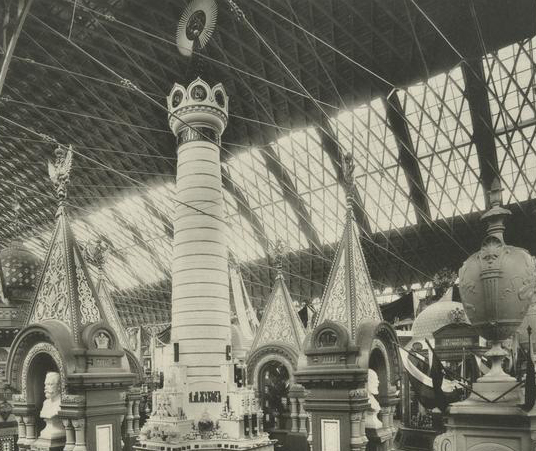
Born in 1853 in the small town of Graivoron to a petty noble family, Vladimir Shukhov showed mathematical brilliance from a remarkably young age. At the Saint Petersburg gymnasium, he once presented his classmates and teacher with an original proof of the Pythagorean theorem. The instructor praised the elegance of the demonstration, yet Shukhov was marked down for departing from the prescribed textbook method—a small early sign of his restless independence. After graduating with distinction in 1871, he enrolled at the Imperial Moscow Technical School, where his mentors included the luminaries Pafnuty Chebyshev, Aleksey Letnikov, and Nikolay Zhukovsky. He completed his studies in 1876 with a Gold Medal, and Chebyshev immediately offered him a mathematics lectureship. Shukhov declined, preferring to throw himself into the engineering industry. That same year he travelled to Philadelphia to work on the Russian pavilion at the Centennial Exposition, the first official World's Fair in the United States, where he met the Russian-American entrepreneur Alexander Bari. Back in Russia, a brief stint in a railway drafting office left him frustrated by routine, and he briefly enrolled at a military-medical academy before Bari convinced him to become chief engineer of a new innovative engineering company, a partnership that would last until the Revolution.
Staying, Creating, and the Quiet End
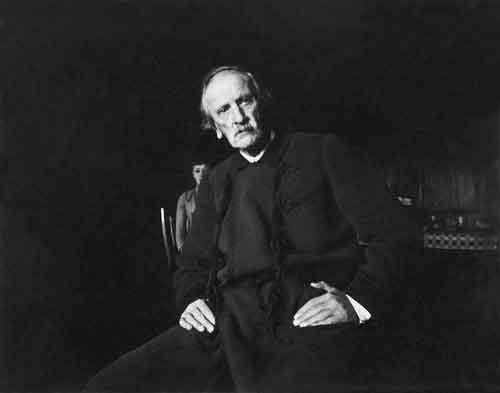
After the October Revolution of 1917, Shukhov received tempting offers from employers around the world but chose to remain in Soviet Russia. In 1919 he articulated a guiding principle that would define his later years: he believed engineers should work independently of politics, because buildings, boilers, and beams would always be needed, and so would the people who designed them. Many of the most significant Soviet engineering projects of the 1920s bore his name. His honours reflected the state's recognition: the Lenin Prize in 1929 and the title of Hero of Labour in 1932. During the Great Purge of the late 1930s he stepped back from active engineering work, yet remarkably he was neither arrested nor persecuted. Beyond his professional life, Shukhov maintained a passionate devotion to photography, producing work across reporting, city landscape, portrait, and constructivist genres that anticipated the later flourishing of fine-art photography. Approximately two thousand of his photographs and negatives survive. He died in Moscow on 2 February 1939 and was laid to rest at the Novodevichy Cemetery.
Gallery
Frequently Asked Questions
Who is Vladimir Shukhov?
Vladimir Grigoryevich Shukhov (1853–1939) was a Russian and Soviet polymath who worked across engineering, architecture, and science. He is widely regarded as a pioneer of modern structural design and industrial innovation.
What are Vladimir Shukhov's most famous inventions?
He is credited with creating the world's first hyperboloid structures, as well as diagrid shells, tensile structures, and gridshells. He also developed the first practical petroleum cracking process, which reshaped the oil industry.
What is the Shukhov Tower?
The Shukhov Tower is a landmark structure that embodies his signature hyperboloid lattice design. It stands as one of the most visible public examples of his structural engineering breakthroughs.
What is the Shukhov cracking process?
It was the first method devised for thermally cracking petroleum into more useful fractions, marking a major step forward in oil refining. This contribution placed him among the key figures in early industrial chemistry alongside his structural work.
Why is Vladimir Shukhov considered important in engineering history?
His new analytical methods for structural analysis unlocked entirely new categories of building, bridge, and industrial design that had not existed before. By fusing advanced mathematics with practical construction, he expanded what engineers thought was structurally possible.
More in Inventors And Engineers 1-17
Spotted an error? Know more?
This is a living reference — every entry is fact-audited, and reader corrections feed straight into our audit queue. Suggest an edit · See this site's audit record