
Stephanie Kwolek
Chemist who invented Kevlar, a fiber five times stronger than steel.

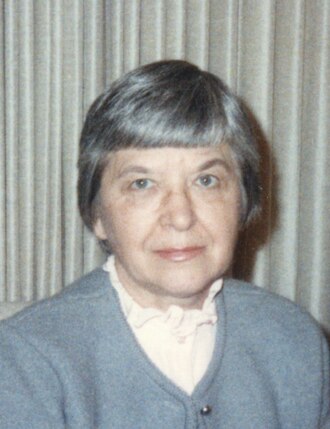
Andy Mabbett · CC BY-SA 4.0
Stephanie Louise Kwolek was a Polish-American chemist who invented Kevlar, a high-strength polymer used in bullet-proof vests and hundreds of other applications. Her career at DuPont spanned more than 40 years, and she received numerous awards for her work in polymer chemistry.
- born
- July 31, 1923
- died
- June 18, 2014
- field
- Chemistry
- nationality
- Polish-American
- known_for
- Inventing Kevlar (poly-paraphenylene terephthalamide)
Lore & Background
Kwolek was born in New Kensington, Pennsylvania, to Polish immigrant parents. Her father, a naturalist, sparked her interest in science through exploring nature. She earned a Bachelor of Science in chemistry from Margaret Morrison Carnegie College in 1946, initially planning to become a physician. She took a temporary job at DuPont to fund medical school but found polymer research so engaging that she made chemistry her lifelong career. Over 40 years at DuPont, she filed 28 patents and contributed to products including Spandex, Nomex, and Kapton.
In 1964, Kwolek's group sought a lightweight fiber to replace steel in tires. Working with aramids, she produced a liquid crystalline solution that appeared turbid and buttermilk-like. Despite concerns it would clog the spinneret, she persuaded technician Charles Smullen to test it. The resulting fiber was stronger than nylon and five times stronger than steel by weight. This discovery led to Kevlar, introduced commercially in 1971. Kwolek continued researching Kevlar derivatives but was not heavily involved in developing its applications.
Reader's Guide
Stephanie Kwolek's invention of Kevlar revolutionized materials science and safety. Kevlar is used in over 200 applications, including bullet-proof vests, firefighter boots, cut-resistant gloves, and protective building materials. Her work opened a new field of polymer chemistry, particularly through the first-ever liquid crystal polymers. Kwolek received the DuPont Lavoisier Medal in 1995, becoming the first woman to earn that honor, and was the fourth woman inducted into the National Inventors Hall of Fame. She also won the National Medal of Technology, the IRI Achievement Award, and the Perkin Medal. Her discovery addressed the need for lightweight armor identified during World War II and continues to save lives. Kwolek signed over the Kevlar patent to DuPont and did not profit directly from its products.
Did You Know?
- Kwolek was the only female employee to receive the DuPont Lavoisier Medal before 2021.
- She initially planned to become a physician and took a temporary job at DuPont to fund medical school.
- Her father, a naturalist, inspired her interest in science by exploring the woods and collecting plants with her.
- Kevlar is five times stronger than steel by weight.
Gallery

Frequently Asked Questions
Who is Stephanie Kwolek?
Stephanie Louise Kwolek was a Polish-American chemist born in 1923 who became one of the most celebrated polymer scientists of the twentieth century. She is best remembered for her groundbreaking work at DuPont, where she spent over four decades developing high-performance materials.
What did Stephanie Kwolek invent?
She created Kevlar, a synthetic fiber whose tensile strength is roughly five times that of steel. The material, chemically known as poly-paraphenylene terephthalamide, was first synthesized in her DuPont laboratory.
What is Kevlar used for?
Its most well-known application is in bullet-resistant body armor worn by law enforcement and military personnel. Beyond that, the fiber appears in everything from tire cords and ropes to surgical sutures and aerospace components.
How long was Stephanie Kwolek's career at DuPont?
She remained with the company for more than forty years, working through numerous projects in polymer chemistry. Her dedication to the field earned her a long list of scientific honors and industry awards.
When did Stephanie Kwolek pass away?
She died on June 18, 2014, at the age of ninety. Her legacy endures through the millions of lives protected by the material she brought into existence.
More in Inventors And Engineers 1-17
Spotted an error? Know more?
This is a living reference — every entry is fact-audited, and reader corrections feed straight into our audit queue. Suggest an edit · See this site's audit record