
Werner von Siemens
German engineer who founded Siemens and pioneered electric transport.

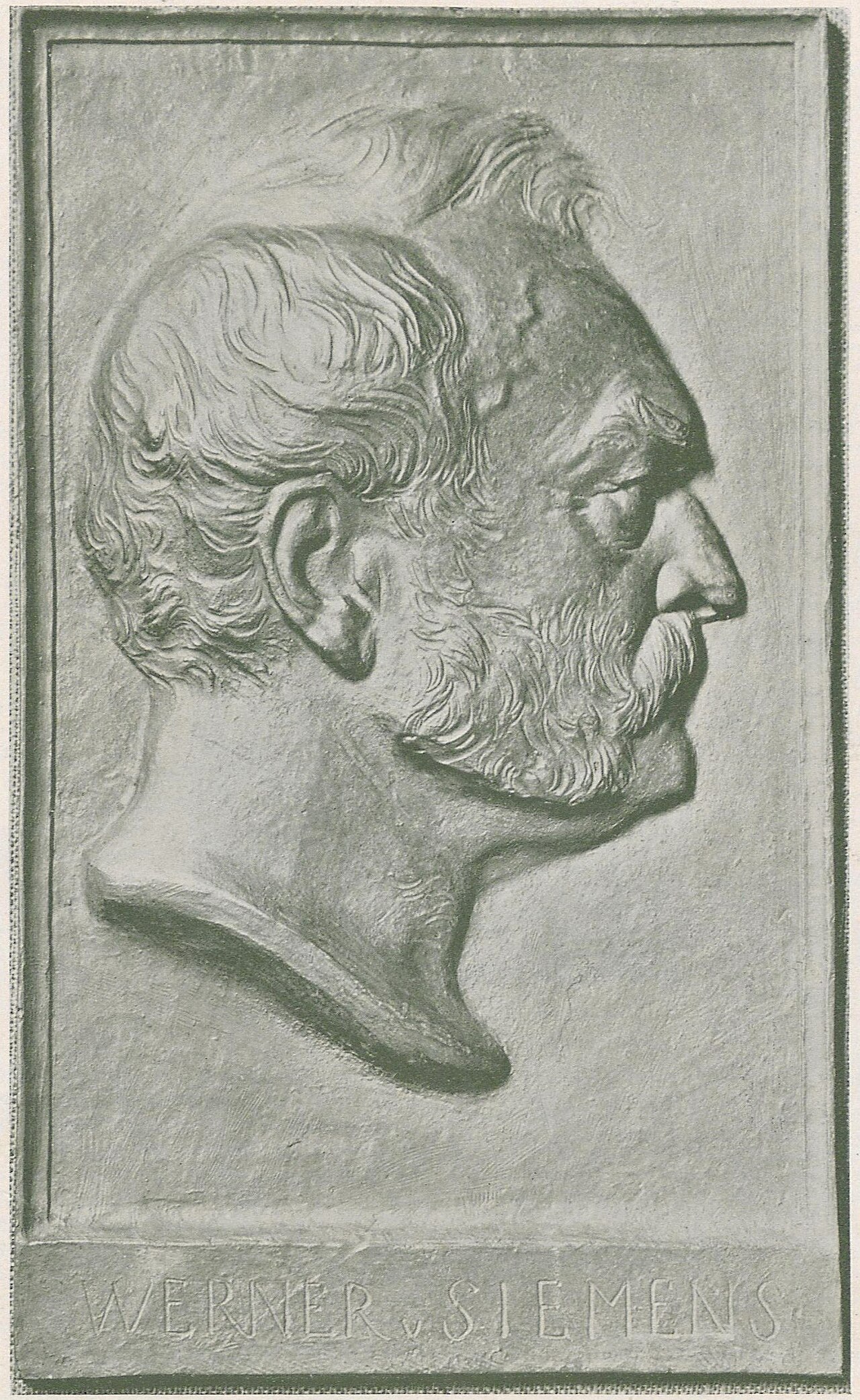
Adolf von Hildebrand · Public domain
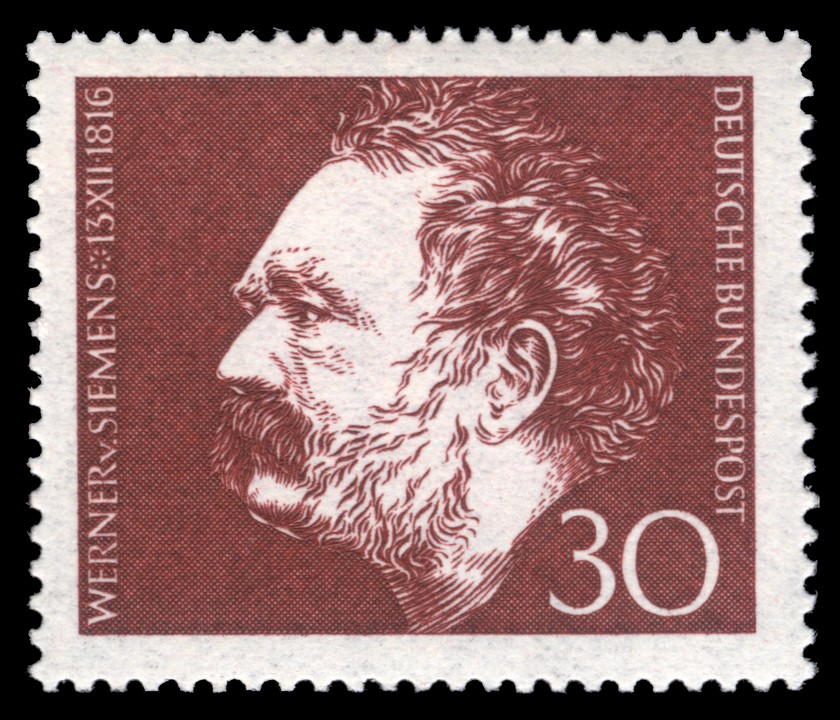
Ernst Werner Siemens, who became Werner von Siemens after being granted noble status in 1888, was a German electrical engineer, inventor, and industrialist. He established the global electrical and telecommunications company Siemens, and his pioneering work includes significant contributions to the electric tram, trolley bus, electric locomotive, and electric elevator, though earlier precursors existed for each. His improvements to the dynamo helped usher in the modern electrical age, and he also contributed to early electric car development.
Born in Lenthe, near Hannover, in the Kingdom of Hanover, he was the third of fourteen children. His father, Christian Ferdinand Siemens, was a tenant farmer, and the Siemens family had been documented in Goslar since 1384. His brothers Carl Heinrich von Siemens and Carl Wilhelm Siemens also became notable figures.
Unable to afford university tuition, Siemens joined the Prussian Military Academy’s School of Artillery and Engineering from 1835 to 1838. He proved a capable soldier, earning medals and helping develop electrically charged sea mines used against a Danish blockade of Kiel during the First Schleswig War. Afterward, he focused on refining existing technologies. In 1843, he sold the rights to his first invention to a Birmingham firm. He then created a telegraph that used a needle to point to letters instead of Morse code, and on 1 October 1847, he founded the company Telegraphen-Bauanstalt von Siemens & Halske, opening a workshop eleven days later. The company quickly expanded internationally, with one brother representing him in England and another in St. Petersburg. Siemens was ennobled in 1888, retired in 1890, and died in Berlin in 1892. The company, later known as Siemens & Halske, Siemens-Schuckertwerke, and finally Siemens AG, was led by his brother Carl, his sons Arnold, Wilhelm, and Carl Friedrich, and later generations. The von Siemens family still held a 6% stake and a supervisory board seat as of 2013.
Beyond the pointer telegraph, Siemens made foundational contributions to electrical engineering in Germany. He built an early electric passenger train in 1879 and the first electric elevator in 1880. His company produced the tubes used by Wilhelm Conrad Röntgen for X-ray research. Though he is sometimes credited with inventing the dynamo, it was actually invented earlier by others; his key contribut
- known_for
- Founding Siemens; pioneering work on electric tram, trolley bus, electric locomotive, electric elevator; improving the dynamo; pointer telegraph
Lore & Background
Ernst Werner Siemens was born in Lenthe, near Hannover, in the Kingdom of Hanover, the third of fourteen children. His father was a tenant farmer. After finishing school, he intended to study at the Bauakademie Berlin but could not afford tuition, so he joined the Prussian Military Academy's School of Artillery and Engineering (1835–1838). He was thought of as a good soldier and contributed to the invention of electrically-charged sea mines used during the First Schleswig War.
In 1843 he sold the rights to his first invention to Elkington of Birmingham. He invented a telegraph that used a needle to point to the right letter, instead of using Morse code. Based on this invention, he founded the company Telegraphen-Bauanstalt von Siemens & Halske on 1 October 1847. The company quickly expanded internationally, with one brother representing him in England and another in St. Petersburg. Siemens was ennobled in 1888, retired in 1890, and died in Berlin in 1892. The company, later known as Siemens & Halske, Siemens-Schuckertwerke, and finally Siemens AG, was led by his brother Carl, his sons Arnold, Wilhelm, and Carl Friedrich, and later generations. The von Siemens family still held a 6% stake and a supervisory board seat as of 2013.
Beyond the pointer telegraph, Siemens made foundational contributions to electrical engineering in Germany. He built an early electric passenger train in 1879 and the first electric elevator in 1880. His company produced the tubes used by Wilhelm Conrad Röntgen for X-ray research. Though he is sometimes credited with inventing the dynamo, it was actually invented earlier by others; his key contribution was significantly improving its design. In 1877, he received a German patent for an electromechanical moving-coil transducer, later adapted for use in loudspeakers and microphones.
Reader's Guide
Werner von Siemens is significant as the founder of Siemens, one of the largest electrotechnological firms in the world, and as a key figure in the development of electrical engineering. His inventions—the electric tram, trolley bus, electric locomotive, and electric elevator—directly shaped modern urban transport and infrastructure. His dynamo is credited with laying the foundation for the modern age of electricity. The SI unit of electrical conductance, the siemens, is named after him. His company also produced tubes used by Wilhelm Conrad Röntgen in investigating x-rays. Siemens was an advocate of social democracy and hoped industrial development would not serve capitalism alone, favoring worker cooperatives. He rejected the idea that science leads to materialism, arguing it inspires humility and admiration for natural laws. His legacy endures through the Siemens conglomerate, which remains a major global firm, and through the continued use of his name in science and technology.
Did You Know?
- The SI unit of electrical conductance, the siemens, is named after Werner von Siemens.
- He invented a telegraph that used a needle to point to the right letter, instead of using Morse code.
- He built the world's first electric passenger train in 1879 and the first electric elevator in 1880.
- He was ennobled in 1888, becoming Werner von Siemens.
Gallery

Frequently Asked Questions
Who is Werner von Siemens?
Ernst Werner Siemens was a 19th-century German electrical engineer and industrialist who received the noble prefix "von" in 1888. He is best remembered as the founder of the Siemens corporation and a driving force behind the early electrical age.
What is Werner von Siemens most famous for inventing?
He is credited with major advances in electric trams, trolley buses, electric locomotives, and electric elevators, though earlier prototypes of each existed before his work. His refinements to the dynamo machine are also widely regarded as a turning point for modern electrical power.
How did Werner von Siemens get the "von" in his name?
He was granted noble status by the Prussian crown in 1888, which added the "von" to his name. Prior to that honorific he was simply known as Ernst Werner Siemens.
What company did Werner von Siemens found?
He established the electrical and telecommunications firm that grew into the global conglomerate Siemens. The company's roots trace back to his early work on the pointer telegraph and broader electrical engineering.
Why is Werner von Siemens considered important in engineering history?
His practical improvements to the dynamo made large-scale electrical generation and distribution feasible, effectively ushering in the modern electrical age. He also pushed early electric mobility forward through contributions to trams, trolley buses, and even early electric car development.
More in Inventors And Engineers 1-17
Spotted an error? Know more?
This is a living reference — every entry is fact-audited, and reader corrections feed straight into our audit queue. Suggest an edit · See this site's audit record