
Shuji Nakamura
Co-inventor of the blue LED and Nobel laureate in physics.

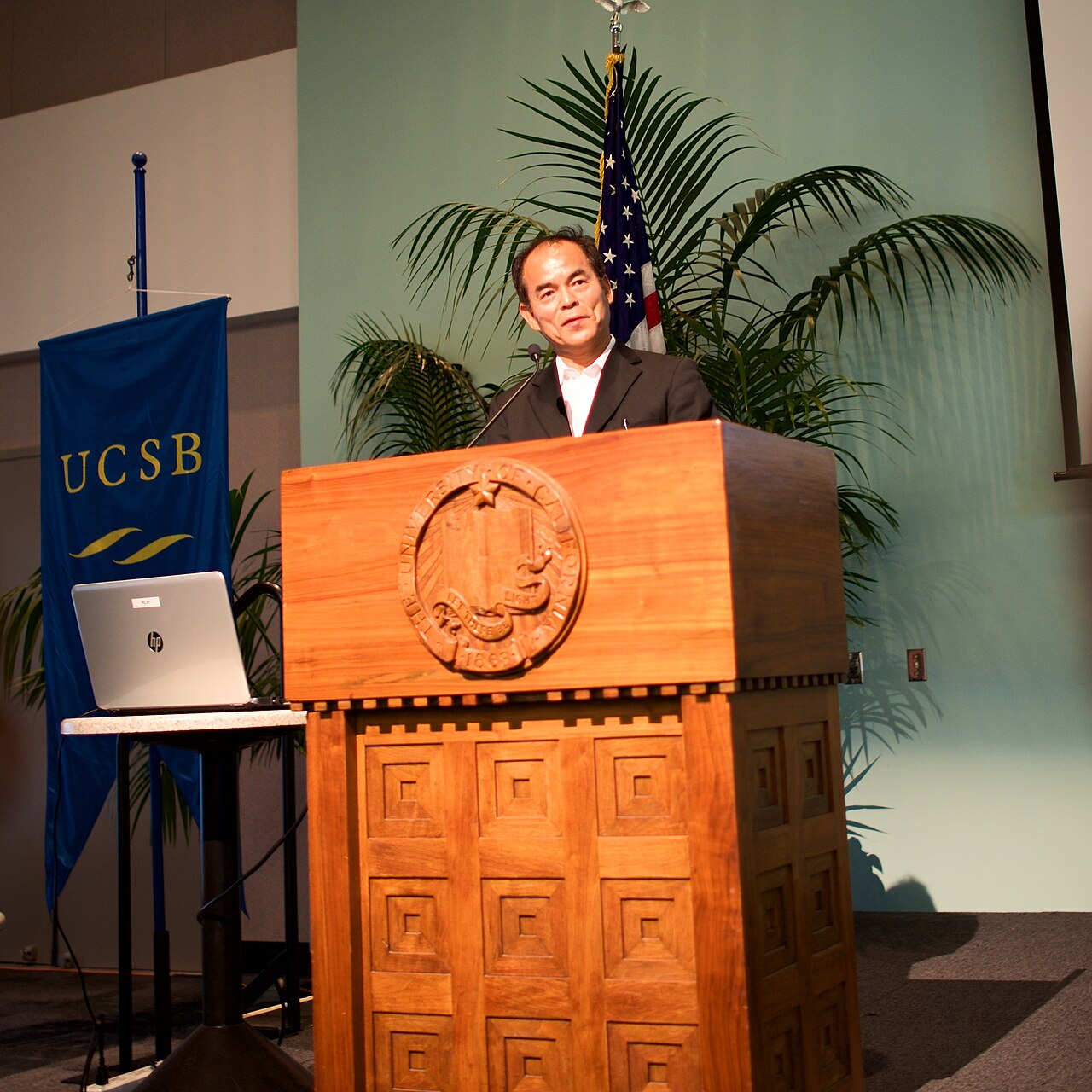
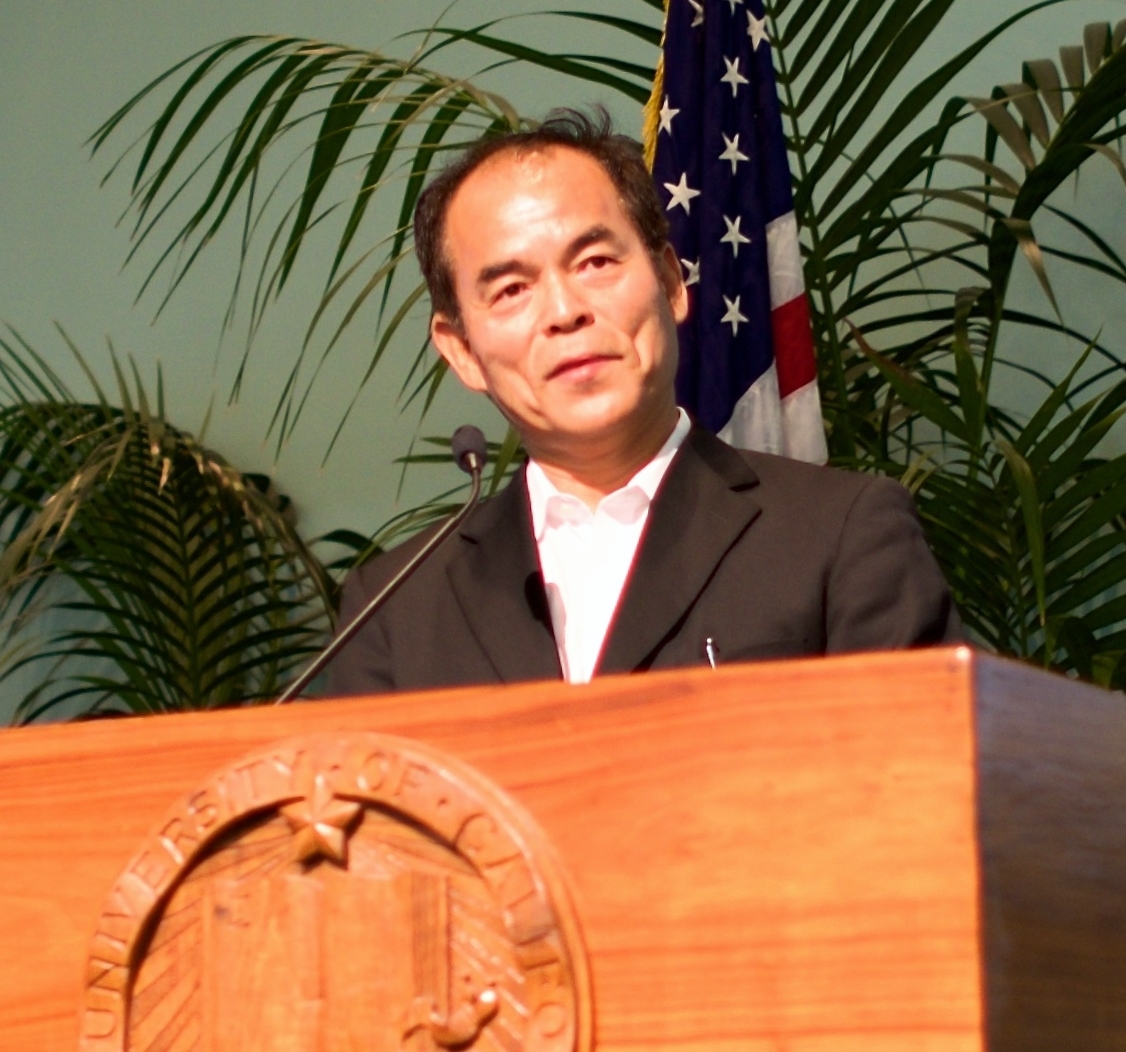
Glenn Beltz · CC BY 2.0
Shuji Nakamura (born May 22, 1954) is a Japanese-American electronics engineer who, together with Isamu Akasaki and Hiroshi Amano, invented the blue LED, a breakthrough that made white LED lighting possible. The three shared the 2014 Nobel Prize in Physics for this work. A specialist in semiconductor technology, Nakamura has been a professor at the University of California, Santa Barbara since 1999.
After earning bachelor’s and master’s degrees in electronic engineering from the University of Tokushima in 1977 and 1979, Nakamura joined the Nichia Corporation in Tokushima. There, he developed the first commercially viable high-brightness gallium nitride (GaN) LED. Its blue light, partially converted to yellow by a phosphor coating, became the basis for white LED lighting, which went into production in 1993. Earlier attempts by J. I. Pankove and RCA in the 1960s had failed to produce a marketable GaN LED, mainly because creating strongly p-type GaN was so difficult. Nakamura built on work by Akasaki’s group, which had made p-type GaN using electron-beam irradiation of magnesium-doped GaN—a method unsuited for mass production. Nakamura devised a thermal annealing process that was far more practical for manufacturing, and he and his team identified hydrogen as the culprit that deactivated the acceptors in GaN.
At the time, many thought a GaN LED was too hard to make. Nakamura was lucky that Nichia’s founder, Nobuo Ogawa, supported and funded the project. But when Ogawa’s son-in-law, Eiji Ogawa, took over as president in 1989, he ordered Nakamura to stop work on GaN, saying it cost too much time and money. Nakamura kept going on his own and succeeded in 1993. Once he had a working prototype—three orders of magnitude brighter than any previous blue LED—Nichia moved to commercialize it. The company’s revenue jumped from about ¥20 billion in 1993 to ¥80 billion by 2001, with 60 percent coming from blue LED products. Its workforce doubled from 640 to 1,300 between 1994 and 1999.
In 1994, Nakamura received a doctorate in engineering from the University of Tokushima, based on his published work. He left Nichia in 1999 to join UCSB after the university’s chancellor, Henry T. Yang, flew to Japan three times to recruit him, promising new research facilities and a Japanese-speaking research team.
Nakamura later sued Nichia over his bonus for the invention, part of a se
- born
- May 22, 1954
- field
- Electronics engineering, semiconductor technology
- nationality
- Japanese–American
- known_for
- Co-inventor of the blue LED (with Akasaki and Amano)
Lore & Background
Nakamura graduated from the University of Tokushima in 1977 with a B.Eng. in Electronic Engineering, and obtained an M.Eng. in the same subject in 1979, after which he joined the Nichia Corporation. While at Nichia, he developed the method for producing the first commercial high brightness gallium nitride (GaN) LED, whose blue light, when partially converted to yellow by a phosphor coating, is key to white LED lighting; this went into production in 1993. He drew on the work of Isamu Akasaki's group, who had published a method to make strongly p-type GaN by electron-beam irradiation, but Nakamura developed a thermal annealing method more suitable for mass production and identified hydrogen as the culprit that passivated acceptors in GaN.
Despite the founder Nobuo Ogawa's support, the company under his son-in-law Eiji Ogawa ordered Nakamura to suspend work on GaN, claiming it consumed too much time and money. Nakamura continued on his own and succeeded in 1993. He later sued Nichia over his bonus for the invention, initially claiming he received only ¥20,000 (≈US$180) for the '404 patent. The lawsuit settled in 2005, with Nichia paying him ¥843 million (≈US$8.1 million at the time).
Reader's Guide
Shuji Nakamura's significance lies in his co-invention of the blue LED, which enabled white LED lighting and revolutionized energy-efficient illumination. His work overcame the long-standing challenge of producing strongly p-type gallium nitride, building on prior research but developing a thermal annealing method suitable for mass production. The commercial success of the blue LED transformed Nichia's finances and led to widespread adoption of LED lighting. Nakamura's legal battle with Nichia highlighted disputes over employee compensation for inventions in Japan, resulting in a record settlement. His later work includes green LEDs, white LEDs, and blue laser diodes used in Blu-ray Discs and HD DVDs. He co-founded Soraa in 2008, a solid-state lighting company, and in 2022 co-founded Blue Laser Fusion, a commercial fusion company. His Nobel Prize in Physics in 2014, shared with Akasaki and Amano, recognized the profound impact of the blue LED on lighting technology.
Did You Know?
- Nakamura received only ¥20,000 (about US$180) from Nichia as a bonus for his blue LED invention, according to his lawsuit.
- He developed a thermal annealing method for making strongly p-type GaN, which was more suitable for mass production than the electron-beam irradiation method of Isamu Akasaki's group.
- Nakamura co-founded a commercial fusion company, Blue Laser Fusion, in November 2022.
- He holds 208 US utility patents as of May 5, 2020.
Solving the Impossible: The Blue LED Breakthrough
Nakamura's defining technical achievement was overcoming what much of the semiconductor community considered an insurmountable barrier: producing a commercially viable, high-brightness gallium nitride light-emitting diode. Earlier attempts by RCA researchers in the 1960s had stalled on the difficulty of achieving strong p-type conductivity in GaN. Nakamura built upon the work of Professor Isamu Akasaki's group, who had demonstrated that electron-beam irradiation of magnesium-doped GaN could yield the needed p-type material, but that technique was impractical for manufacturing at scale. Nakamura's critical contribution was devising a thermal annealing process that achieved the same result in a manner compatible with mass production. He and his colleagues also identified hydrogen as the root cause of acceptor passivation in the material, a finding that clarified the underlying physics. The device, brought to commercial production in 1993, emitted blue light roughly one thousand times more intensely than any previously demonstrated LED. When that blue light is partially converted to yellow through a phosphor coating, it produces the white LED illumination that now lights homes and streets around the world.
From Tokushima to UCSB and Beyond
Nakamura's professional trajectory traces a clear arc from regional Japan to the global research frontier. He earned his B.Eng. in Electronic Engineering from the University of Tokushima in 1977, followed by an M.Eng. in the same discipline in 1979, after which he joined the Nichia Corporation, also headquartered in Tokushima. He later received a D.Eng. from Tokushima in 1994, conferred through a thesis submitted by publication. In 1999, at the personal invitation of UCSB chancellor Henry T. Yang—who made three separate trips from California to Japan to recruit him—Nakamura joined the faculty at the University of California, Santa Barbara, where he holds positions in both Materials and Electrical and Computer Engineering. His work at UCSB extended well beyond the original blue LED: he contributed to green LEDs, white LED systems, and the blue laser diodes powering Blu-ray Disc and HD DVD formats. In 2008, he co-founded Soraa with colleagues Steven P. DenBaars and James Speck to advance solid-state lighting on pure GaN substrates. By May 2020, he held 208 US utility patents. In November 2022, he co-founded Blue Laser Fusion, a commercial fusion venture that raised $25 million in July 2023 from investors including Toyota-backed funds.
The Nichia Dispute and a Fight for Fair Recognition
Nakamura's relationship with his former employer became one of the most high-profile labor conflicts in Japanese corporate history. While the company's founder Nobuo Ogawa had championed the GaN project, his son-in-law Eiji Ogawa, who assumed the presidency in 1989, ordered Nakamura to halt work, deeming it too costly and time-consuming. Nakamura persisted independently and achieved his breakthrough in 1993. Once the device proved commercially viable, Nichia pivoted aggressively, and its revenue nearly quadrupled from roughly ¥20 billion in 1993 to ¥80 billion by 2001, with sixty percent attributable to blue LED sales. Yet Nakamura felt grossly undercompensated, claiming he received only ¥20,000 for what he called the '404 patent.' In 2001 he sued for ¥2 billion; the district court awarded him ¥20 billion. Nichia appealed, and the parties ultimately settled in 2005 for ¥840 million—still the largest invention compensation ever paid by a Japanese company to an employee, though Nakamura noted it barely covered his legal expenses. The episode cemented his public criticism of Japanese firms for failing to reward their researchers with fair salaries and recognition.
A Legacy Spanning Lighting, Entertainment, and Fusion
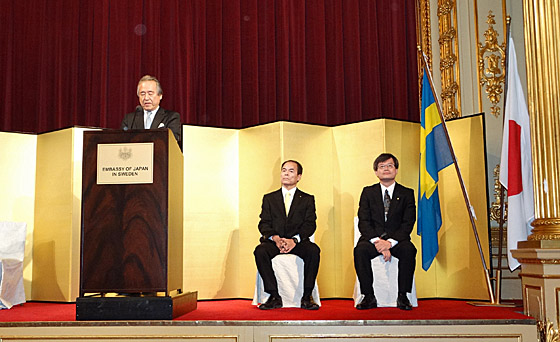
The blue LED that Nakamura helped bring to market in 1993 quietly reshaped global energy consumption and consumer electronics. By enabling efficient white lighting through phosphor conversion, it set the stage for the solid-state lighting revolution that now dominates residential, commercial, and industrial illumination. The technology also underpins the blue laser diodes used in Blu-ray Disc and HD DVD players, extending Nakamura's influence into the entertainment and data-storage sectors. His 2014 Nobel Prize in Physics, shared with Isamu Akasaki and Hiroshi Amano, recognized the collective achievement and elevated semiconductor lighting to the highest tier of scientific distinction. Beyond the Nobel, Nakamura's career has spanned multiple eras of innovation: from the GaN LED to Soraa's pure-GaN solid-state lighting platform, and most recently to Blue Laser Fusion, a venture exploring commercial fusion energy that attracted $25 million in funding in 2023 from investors including Toyota-backed funds. With 208 US utility patents to his name, his body of work represents a rare thread of continuous, high-impact invention across decades and multiple fields.
Gallery

Frequently Asked Questions
Who is Shuji Nakamura?
Shuji Nakamura is a Japanese-American electronics engineer born on May 22, 1954, best recognized as one of the three co-inventors of the blue LED. He is a specialist in semiconductor technology and has held a professorship at the University of California, Santa Barbara since 1999.
What did Shuji Nakamura invent?
Working alongside Isamu Akasaki and Hiroshi Amano, Nakamura developed the blue LED, the critical missing wavelength that made practical white LED lighting feasible. This breakthrough transformed energy-efficient lighting for the modern world.
Why did Shuji Nakamura win the Nobel Prize?
Nakamura shared the 2014 Nobel Prize in Physics with Akasaki and Amano for their collective achievement in creating a practical blue light-emitting diode. The committee recognized the invention as a foundational advance in semiconductor physics and solid-state lighting.
Where does Shuji Nakamura work today?
Since 1999, Nakamura has served as a professor at the University of California, Santa Barbara, where he continues his research in semiconductor technology.
What is Shuji Nakamura's educational background?
Nakamura completed both his bachelor's degree (1977) and master's degree (1979) in electronic engineering at the University of Tokushima in Japan. After graduating, he joined Nichia Corporation in Tokushima, where his blue-LED work took shape.
More in Inventors And Engineers 1-17
Spotted an error? Know more?
This is a living reference — every entry is fact-audited, and reader corrections feed straight into our audit queue. Suggest an edit · See this site's audit record