
Thomas Telford
Scottish civil engineer dubbed the 'Colossus of Roads'.

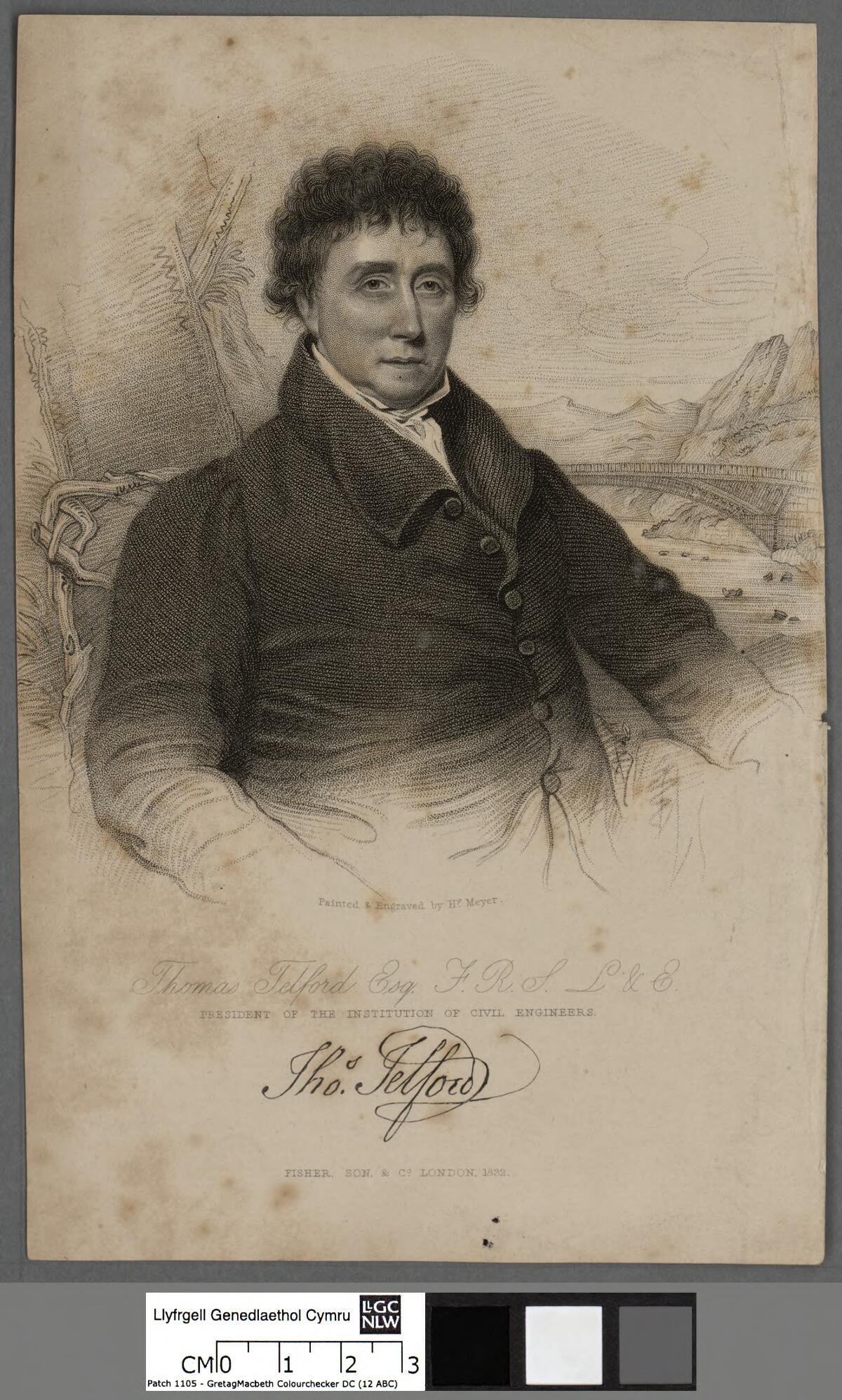
Henry Hoppner Meyer · Public domain
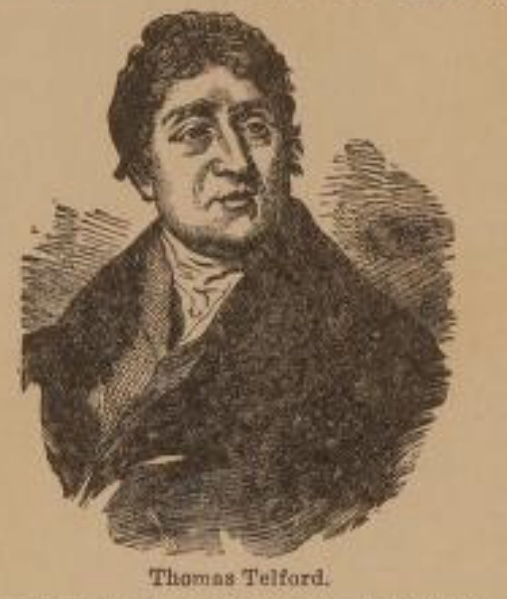
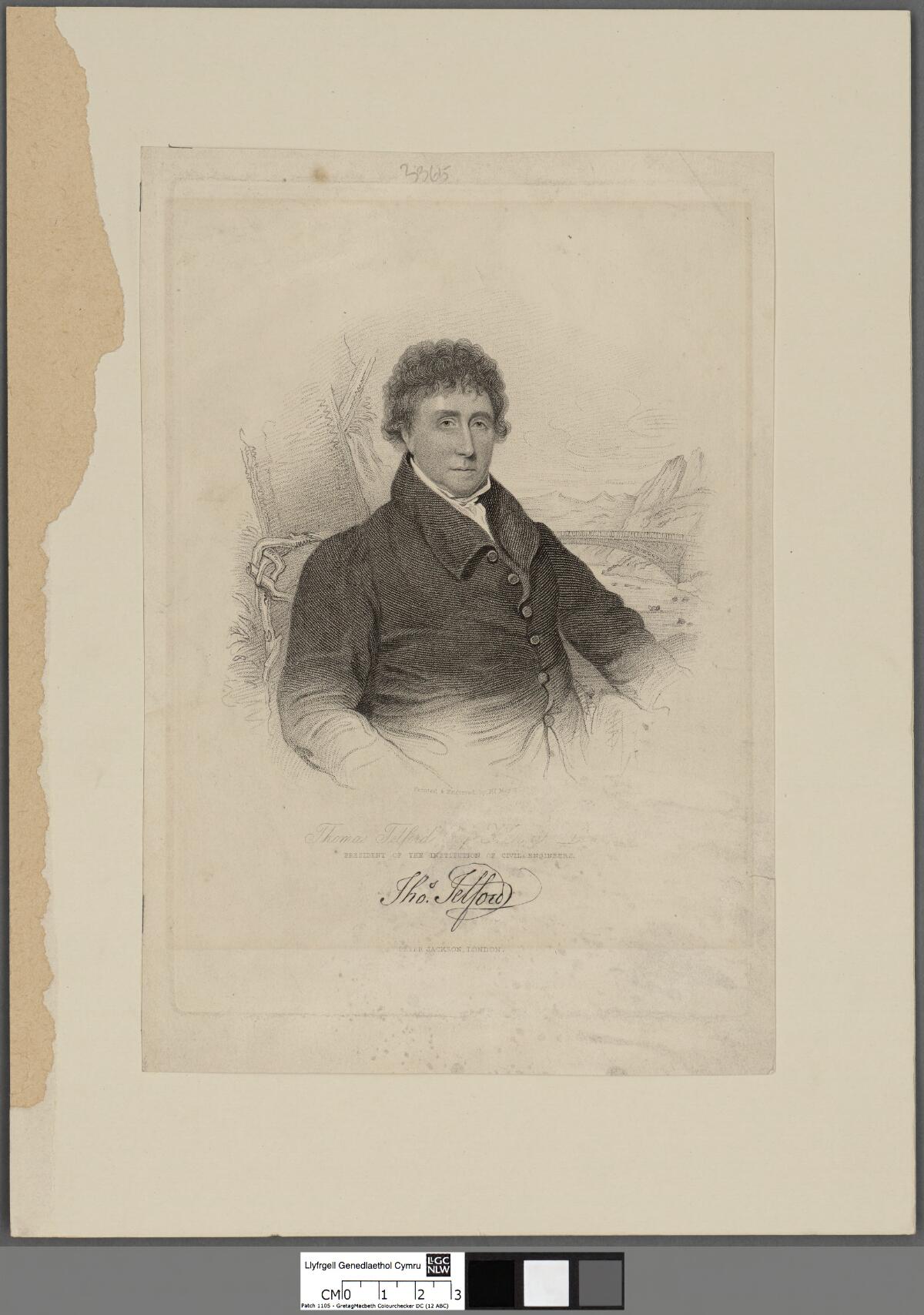
Thomas Telford (9 August 1757 – 2 September 1834) was a Scottish civil engineer who became known for his prolific design of roads, bridges, canals, and harbours. He was elected the first president of the Institution of Civil Engineers, a post he held for 14 years until his death, and was dubbed the 'Colossus of Roads' for his extensive highway and bridge projects.
- born
- 9 August 1757
- died
- 2 September 1834
- field
- Civil engineering
- nationality
- Scottish
- known_for
- Design of roads, bridges, canals, and harbours; first president of the Institution of Civil Engineers
Lore & Background
Telford was born at Glendinning, a hill farm in Dumfriesshire, and was raised in poverty by his mother after his father died soon after his birth. At age 14 he was apprenticed to a stonemason, and his earliest work can be seen on a bridge across the River Esk in Langholm. He later moved to London, where he worked on additions to Somerset House, and then to Portsmouth dockyard, extending his skills to project specification and management. In 1787, through his patron William Pulteney, he became Surveyor of Public Works in Shropshire, where his projects included renovating Shrewsbury Castle and designing bridges such as Montford Bridge and his first iron bridge at Buildwas.
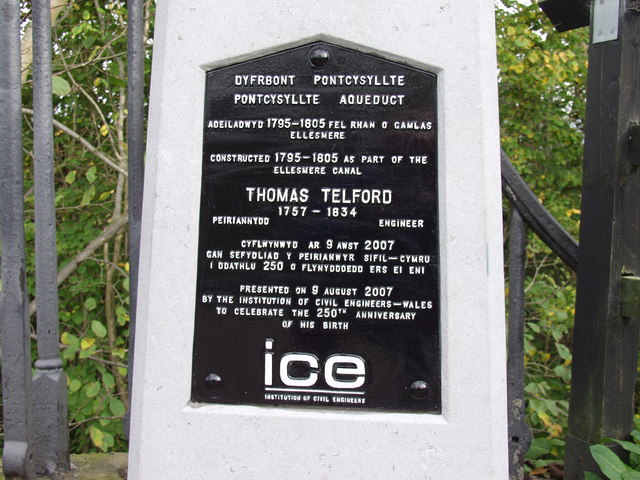
Telford's reputation in Shropshire led to his appointment in 1793 to manage the Ellesmere Canal, which included the Pontcysyllte Aqueduct—a cast-iron trough structure over 1,000 feet long and 126 feet high. He also designed the Longdon-on-Tern Aqueduct, a cast-iron aqueduct pre-dating Pontcysyllte. In 1801, he devised a master plan to improve communications in the Scottish Highlands, a 20-year project that included the Caledonian Canal, over 920 miles of new roads, more than a thousand bridges, and numerous harbour improvements. He also worked on the London to Holyhead road, including the Menai Suspension Bridge, which at 580 feet was the longest suspension bridge of its time.
Reader's Guide
Thomas Telford's significance lies in his broad influence on civil engineering during the early 19th century. He was a pioneer in the use of cast iron for large-scale structures, as seen in the Pontcysyllte Aqueduct and his iron bridges. His work on the Scottish Highlands—roads, bridges, canals, and harbours—transformed regional connectivity and commerce. As the first president of the Institution of Civil Engineers, he helped establish civil engineering as a recognized profession. His legacy is also commemorated by the town of Telford in Shropshire, named after him. The Pontcysyllte Aqueduct was designated a UNESCO World Heritage Site in 2009. Telford's methods, such as testing materials before construction and inventing new sealing techniques, influenced later engineering practices. His projects, often financed through the Exchequer Bill Loan Commission, also provided employment during economic downturns.
Did You Know?
- Telford was dubbed the 'Colossus of Roads', a pun on the Colossus of Rhodes.
- He was elected the first president of the Institution of Civil Engineers, a post he held for 14 years until his death.
- The Pontcysyllte Aqueduct, designed by Telford, was designated a UNESCO World Heritage Site in 2009.
- Telford's Menai Suspension Bridge, at 580 feet, was the longest suspension bridge of its time.
Humble Origins and Self-Made Mastery
Thomas Telford entered the world on 9 August 1757 on a hill farm called Glendinning, just a few miles east of Eskdalemuir Kirk in the remote parish of Westerkirk, Dumfriesshire. His father, a shepherd named John, passed away shortly after the boy's birth, leaving his mother Janet Jackson to raise him in considerable poverty. With no formal schooling to speak of, young Thomas found his first trade at fourteen, apprenticing to a stonemason. Some of that earliest masonry work still stands on a bridge spanning the River Esk at Langholm. He later spent time in Edinburgh before relocating to London in 1782, where encounters with the architects Robert Adam and Sir William Chambers drew him into building additions at Somerset House. By 1784 he was at Portsmouth dockyard, and though he remained largely self-taught, he had already stretched his abilities into the specification, design, and management of full building projects. A boy from a hill farm had become a working engineer by his mid-twenties.
Iron and Water: The Ellesmere Canal Era
In 1793 Telford was entrusted with the detailed design and construction of the Ellesmere Canal, a scheme to link the ironworks and collieries of Wrexham through Ellesmere to Chester and onward to the River Mersey. The project's crowning achievement was the Pontcysyllte Aqueduct, soaring over the River Dee in the Vale of Llangollen. Stretching more than 1,000 feet and rising 126 feet above the valley floor, the structure comprised nineteen arches of 45-foot span, each carrying a trough built from cast-iron plates set into masonry. As a pioneer in deploying cast iron on such a grand scale, Telford had to devise novel methods, including sealing iron joints with a mixture of boiling sugar and lead. Canal engineer William Jessop supervised the overall scheme but delegated the hands-on execution to Telford. The aqueduct received UNESCO World Heritage status in 2009. Around the same period he also designed the Longdon-on-Tern Aqueduct for the Shrewsbury Canal, a cast-iron structure that predated Pontcysyllte and surpassed the earlier Derby Canal aqueduct by Benjamin Outram in size. The Ellesmere Canal itself was never fully completed, running out of revenue by 1805.
Conquering the Highlands: A Two-Decade Master Plan
In 1801, with the backing of his wealthy patron William Pulteney, Telford was commissioned to devise a sweeping plan to modernise transport and communications across the Scottish Highlands. The resulting programme stretched over roughly twenty years and was staggering in scope. It called for the construction of the Caledonian Canal threading the Great Glen, a redesign of portions of the Crinan Canal, and the laying of some 920 miles of entirely new roads. More than a thousand bridges were to be built, including the Craigellachie Bridge, while harbour works were carried out at Aberdeen, Dundee, Peterhead, Wick, Portmahomack, and Banff. The plan also encompassed the erection of thirty-two new churches. Beyond the Highlands, Telford extended his highway work into the Scottish Lowlands, adding 184 miles of new roads and a string of impressive bridges. These ranged from a 112-foot stone arch spanning the River Dee at Tongueland in Kirkcudbright, completed around 1805–06, to the 129-foot-tall Cartland Crags bridge near Lanark, finished in 1822. The sheer breadth of this programme—canals, roads, bridges, harbours, and churches—demonstrated a civil engineer operating at a national scale.
The Colossus of Roads: Legacy and Institutional Leadership
His extraordinary output in highways and their associated bridges earned Telford the nickname "Colossus of Roads," a deliberate play on the ancient Colossus of Rhodes. The title captured a man whose reputation as a prolific designer of roads and bridges had become synonymous with the craft itself. His command spanned every major discipline of early nineteenth-century civil engineering—canals, bridges, harbours, tunnels, and roads—which is why he was chosen as the very first president of the Institution of Civil Engineers. He held that chair for fourteen years, serving until his death on 2 September 1834. His influence on materials practice was equally significant; he was among the earliest engineers to insist on thorough testing of components before they went into a structure. At Buildwas in Shropshire he designed an iron bridge that, inspired by Abraham Darby's famous Ironbridge, achieved a span thirty feet wider at roughly half the weight, a clear statement that his approach was leaner and more rational. The town of Telford in Shropshire, named in his honour, stands as a permanent civic tribute to the shepherd's son from Dumfriesshire who reshaped the built landscape of two nations.
Gallery
Frequently Asked Questions
Who is Thomas Telford?
Thomas Telford was a Scottish civil engineer born on 9 August 1757 who devoted his career to designing major infrastructure across Britain. He died on 2 September 1834, leaving behind a vast legacy of built works.
What nickname did Thomas Telford earn?
He was called the 'Colossus of Roads' because of the enormous volume and scale of his highway and bridge construction projects throughout his career.
What leadership role did Thomas Telford hold in civil engineering?
Telford was elected the very first president of the Institution of Civil Engineers and served in that capacity for fourteen years until his death in 1834.
What kinds of projects did Thomas Telford design?
His work spanned roads, bridges, canals, and harbours, making him one of the most versatile and prolific civil engineers of his era.
Why is Thomas Telford considered important in engineering history?
His extensive infrastructure projects set new standards for civil engineering practice, and his long tenure as the inaugural president of the Institution of Civil Engineers helped define the profession's identity for generations.
More in Inventors And Engineers 1-17
Spotted an error? Know more?
This is a living reference — every entry is fact-audited, and reader corrections feed straight into our audit queue. Suggest an edit · See this site's audit record